
Dialogue has many uses, but the most important one for me is that it brings your characters alive. It breathes life into them, gives them personality and helps you differentiate one character from another.
Back in the days when I wrote comic strips for children’s magazines, with a word limit of something like 24 characters per frame, which rarely left space for speech tags, my editors often told me that the reader should know which character was speaking by their dialogue. This even applied to inanimate characters such as Thomas the Tank Engine. Believe me, every one of those engines had their own personality – I was actually given character profiles for them – and I’d soon get a message to rewrite if Thomas, Henry, Percy or any of them said something out of character!
This was a good lesson to learn, which I still apply to this day. If you listen to people speak everyone talks differently, not only the tone of their voice or their accent, but their sentence structure, the words and grammar they use. It’s important to incorporate these natural speech patterns into your character’s dialogue as this makes it seem more relatable to the reader.
As a creative writing tutor, I found that a lot of my students used formal grammar when their characters spoke, which often made the dialogue sound stilted or unnatural – depending on the character itself, of course. A school teacher, librarian, business person will often use correct grammar, especially in their line of work whereas a busy mum, two friends casually chatting, someone whose native language isn’t English, probably won’t. It’s important to use the dialogue that is realistic to your characters. The same goes for internal dialogue or thoughts.

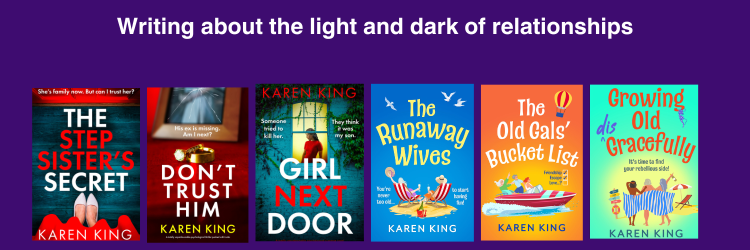
I’ve had a couple of emails lately from readers who have kindly told me that they love my books, but my incorrect use of grammar niggles them. They refer to the fact that my characters often say ‘Sam and me’ instead of ‘Sam and I’. This is not because I don’t know the correct use of grammar – I’m a former English language tutor – but because this is the way these characters naturally speak. Grammar isn’t important in spoken or internal dialogue. Realism is.
Similarly, I have had a couple of messages from readers asking me not to use phrases such as ‘Oh God’ or swear words when my character’s speak. I write psychological suspense novels with dramatic scenes involving rather unpleasant characters, where often lives are in danger so dialogue like this is realistic. It is only through authentic dialogue that we can create credible characters.
 Karen King